
TVC production starts with a clear brief
TVC production is not only about creating attractive footage. For a business, a TV commercial is a communication asset that can express a brand message, introduce a product, support a campaign or create video materials for multiple channels. That is why the process should begin with a clear brief: what the objective is, who the audience is, what message must be remembered, where the video will be distributed and how success will be evaluated.
A good brief does not have to be long, but it must help the production team understand the business problem correctly. When the client and production house align on objectives from the beginning, concept development, scripting, pre-production, filming and post-production are less likely to drift off direction. If your business is planning a campaign, you can explore Amaa Media’s TV commercial production service.
What should a TVC brief include?
The brief is the foundation for creative development. The more specific it is, the easier it becomes to estimate scope, build a production timeline and propose the right creative direction. Before speaking with a producer, a business can prepare the following information groups.
- Communication objective: brand awareness, product launch, sales support, recruitment, capability introduction or support for a specific campaign.
- Target audience: end customers, decision-makers, purchase influencers or a public group whose perception needs to change.
- Core message: one central idea the viewer should remember after watching the TVC, instead of too many competing messages.
- Distribution channels and formats: television, digital, social media, events, point-of-sale screens or several edited versions.
- Practical constraints: timing, locations, estimated budget, existing brand assets, approval stakeholders and any legal requirements.
The overall workflow from brief to finished video
Every TVC project has a different level of complexity, but a professional workflow usually moves through the following major stages. Clear stages help the client know when feedback is needed, when decisions must be locked and when changes may affect timeline or cost.
- Receive the brief and analyse the communication objective.
- Develop the concept, key message and creative direction.
- Write the script and prepare a storyboard or shot list.
- Pre-production: plan the shoot, cast talent, choose locations, prepare props, schedule the crew and finalise logistics.
- Production: film the scenes, capture location sound when needed, supervise visuals and manage progress on set.
- Post-production: edit, finish sound, grade colour, add motion graphics, export versions and deliver the approved files.
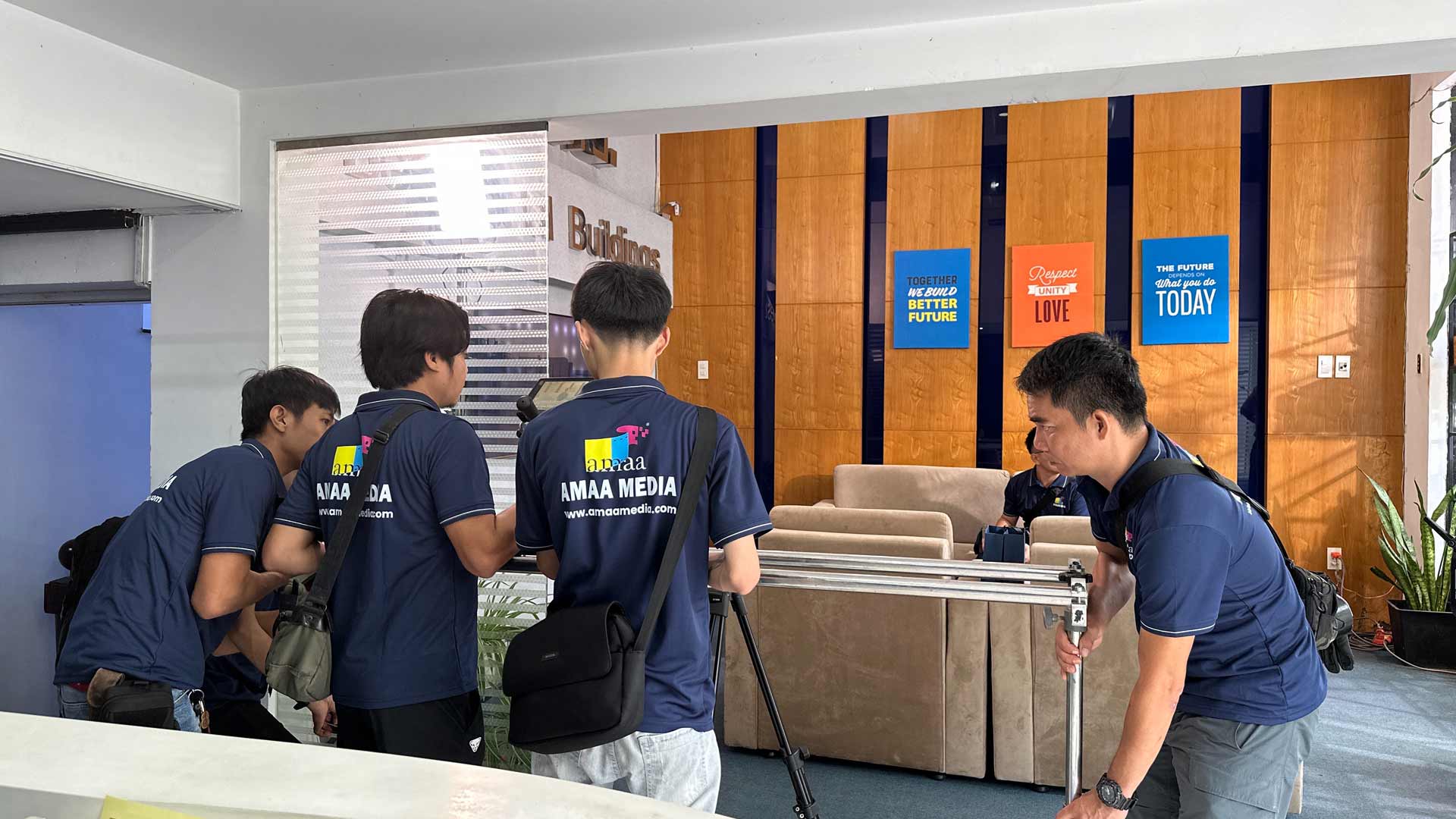
From idea to script: turning an objective into a story
After the brief, the creative team needs to translate the communication challenge into an idea that can actually be produced. This stage matters because the concept defines the tone of the TVC: emotional, rational, humorous, premium, approachable, inspiring or focused directly on product benefits.
Concept and key message
The concept is the larger creative frame, while the key message is what the audience should remember. An effective TVC usually does not try to say everything. It chooses one sharp angle that fits the brand and can be developed into visuals, dialogue, editing rhythm and sound.
Script and content structure
The script should clarify the opening, development, key moment and call to action. In a short TVC, every second matters, so information must be arranged deliberately. Feedback on the script should be tied to communication goals rather than personal preference alone.
Storyboard or shot list
A storyboard helps visualise composition, action and transitions before filming begins. For projects that do not need detailed drawings, a shot list is still essential so the crew can agree on the required scenes. This is the bridge between the idea on paper and the practical production plan.
Pre-production: the stage that makes the shoot run smoothly
Pre-production turns the approved script into a realistic production plan. Many problems that appear on set are caused by insufficient preparation. For that reason, businesses should see pre-production as risk control, not just administrative preparation.
- Lock the script, storyboard, moodboard and visual direction.
- Prepare the shooting schedule, call sheet, crew allocation and equipment list.
- Scout locations and check lighting, sound, power access, permits and backup options.
- Cast talent, choose presenters, prepare wardrobe, props, products and brand identity assets.
- Hold a pre-production meeting so all parties can approve the final plan before the shoot day.
TVC filming: controlling quality on set
The shoot day brings many roles together: director, cinematographer, lighting team, sound team, art department, production team, client representatives and brand stakeholders. The goal is not only to capture all required shots, but also to keep visuals, performance, rhythm and message aligned with the approved direction.
The role of the producer and director
The producer tracks progress, coordinates resources and handles issues as they arise. The director focuses on storytelling, performance, framing and the emotional quality of each scene. When these roles work well together, the set can make faster decisions and waste less time.
The role of the brand representative
The brand representative should join important approval points: whether the product appears correctly, whether information is accurate and whether brand identity is used properly. However, changing the core concept on set often creates risks for both timeline and quality.
Managing production data
After each shoot day, footage must be managed carefully for post-production. File checks, backups and scene notes help the editor save time, especially when a project needs multiple versions for different distribution channels.
Post-production: turning footage into a communication asset
Post-production is more than cutting shots together. This stage creates the narrative rhythm, selects the strongest moments, refines sound, colour, text, graphics and final output versions. For projects that require deeper editing work, you can also review Amaa Media’s video post-production service.
- Create a rough cut to check structure, pacing and message clarity.
- Develop the fine cut after feedback, refining duration, transitions and shot selection.
- Finish audio, music, voice-over, sound design and noise treatment when needed.
- Apply colour grading to unify the visual mood and support brand identity.
- Add motion graphics, packshot, logo, supers, subtitles or localisation versions when required.
- Export files according to each platform’s technical specifications and deliver the approved versions.
Feedback and approval during editing
Post-production feedback should be focused, specific and connected to the original brief. An effective feedback round identifies the issue, explains why the change is needed and states its priority. This helps the editor understand the goal instead of guessing from vague comments.
- Collect feedback from stakeholders into one consolidated list before sending it to the production team.
- Separate mandatory changes, recommended improvements and preference-based comments.
- Use timecodes when commenting on visuals, dialogue, sound or on-screen text.
- Avoid changing the objective, message or major structure once the project has entered fine cut.
- Confirm the final version in writing before exporting the master and shorter cut-down files.
Frequently asked questions about TVC production
How long should a TVC be?
The right duration depends on the distribution channel, objective and storytelling approach. Businesses should define the main version and shorter cut-downs early so the TVC can work for television, digital, social media or event screens.
When should the script be locked?
The script should be approved before detailed pre-production begins. If major changes happen after locations, casting, shoot schedule or equipment are booked, the project may be affected in both timeline and cost.
What should a business prepare before the shoot?
A business should prepare products, brand identity assets, an authorised representative for on-set approvals, legal information if relevant and any materials that must appear in the TVC. These items should be checked during the pre-production meeting.
Should a TVC be planned in multiple versions for different platforms?
If the TVC will be used across several channels, planning versions from the beginning is more efficient. The crew can consider framing, duration, subtitles, packshot needs and required cut-downs before filming.
How can a project reduce too many editing rounds?
The best approach is to start with a clear brief, approve concept and script carefully, define decision-makers, provide timecoded feedback and prioritise requested changes. A clear process reduces repeated revisions caused by misalignment.
Start your TVC project with a clear workflow
An effective TVC needs more than beautiful images: it needs the right brief, a sharp concept, a clear script, careful pre-production, a well-controlled shoot and purposeful post-production. If your business is preparing a TVC for an upcoming campaign, submit a production brief to Amaa Media and discuss the next step.