
For construction projects that run for months or years, documenting progress with scattered photos is often not enough to understand the full story. Owners, contractors, project management teams and communications teams need a clearer way to follow site progress, report key milestones and create useful media assets after the project is completed.
That is why many projects use construction timelapse. It is not only an impressive fast-motion video, but also a structured method for documenting progress and turning a long construction journey into a concise, easy-to-understand visual story with long-term value.
What is construction timelapse?
Construction timelapse is a technique that captures images or video at scheduled intervals on a jobsite over a long period of time, then edits those frames or clips into a video that shows how the project changes over time.
Instead of recording continuously like conventional video, a timelapse system is usually configured to capture at fixed intervals: every few minutes, every hour, every day or according to a schedule that fits the project timeline. When these images are processed and edited together, viewers can see the entire process from site preparation, foundation work and structural construction to exterior completion and handover in a short video.
The key difference is that timelapse compresses a long process into content that is easy to watch, share and use in reporting. If your company is exploring a practical setup, Amaa Media’s construction time-lapse service can help you define what should be prepared before installation.
How is construction timelapse different from regular progress video?
Regular progress video is usually filmed in separate sessions, such as once a month or at specific inspection milestones. This approach works well for documenting the current site condition, interviewing the project team or producing short progress updates, but it can miss many changes that happen between shoots.
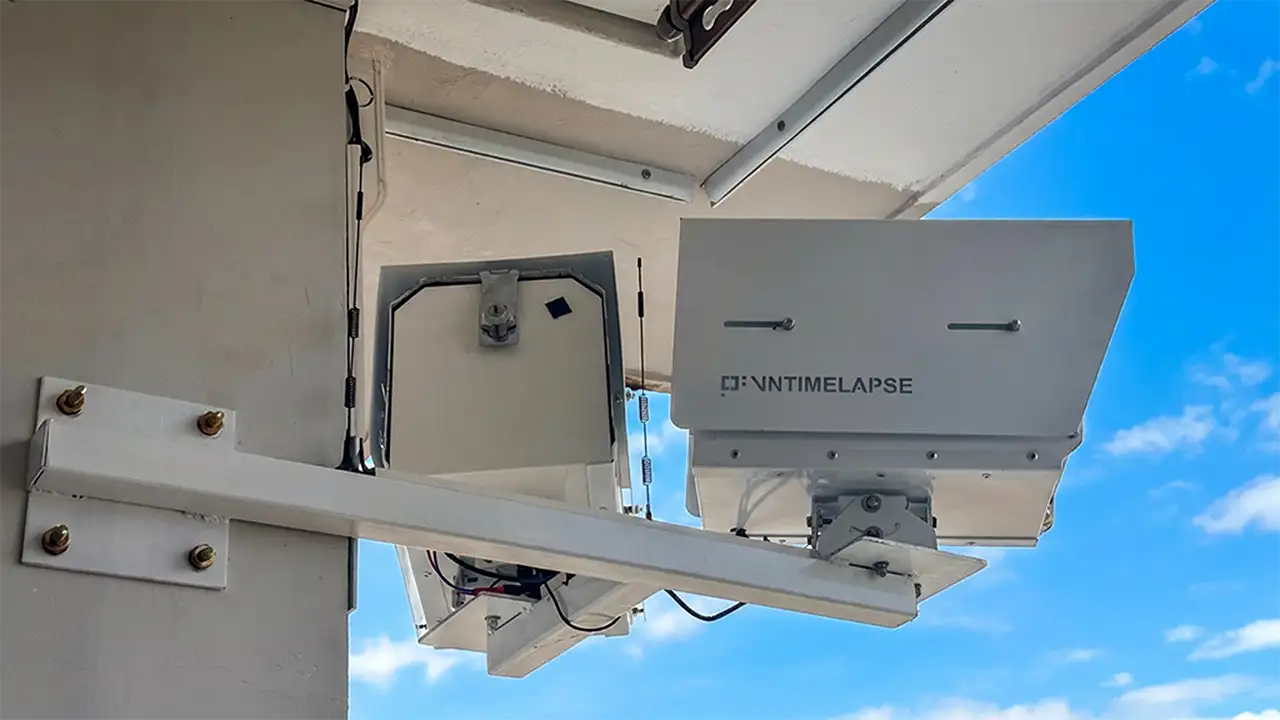
Construction timelapse focuses on continuity. Cameras are installed in strategic positions and capture the site at scheduled intervals throughout the project, so the final video can show the flow of the build: how the ground changes, how the structure forms and how construction activity progresses through each phase.
When should you use progress video?
Progress video is useful when you need narration, interviews, detailed footage, drone shots or close-up visuals at specific moments. It is a good option for periodic updates, internal news, project communications or presentation materials.
When should you use timelapse?
Timelapse is the better choice when a project needs long-term documentation, remote viewing support, a complete visual record of the construction process or a strong before-and-after video after completion. For larger projects, the two formats can complement each other rather than replace each other.
Benefits of construction timelapse
Construction timelapse creates value for many stakeholders in a build, from site management to brand communications. These are the most common benefits.
- Visual progress tracking: A consistent sequence of images helps the project team observe how the site changes over time and understand progress faster than reviewing hundreds of separate photos.
- Clearer reporting for owners and partners: In progress meetings, visual material is often more persuasive than long written descriptions, especially when teams need to show completed phases and important milestones.
- Marketing assets after completion: After handover, a timelapse video can be used on websites, social media, opening events, capability profiles or project recap videos.
- A historical record of the build: For long-cycle projects, time-based visual documentation helps companies preserve the delivery history for internal training, project review or reference on similar future projects.
- Greater transparency in project communications: When planned properly, timelapse gives stakeholders a clearer view of actual progress, from leadership and investors to partners, customers or the wider community.
Which projects are suitable for construction timelapse?
Not every build requires a long-term timelapse system, but it is especially useful for projects with a meaningful timeline, visible physical transformation and a clear need for reporting or communications.
- Real estate projects: residential communities, apartment buildings, shopping centers, resorts or mixed-use developments that need to show the journey from groundworks to completion.
- Factories and industrial facilities: plant construction, production line expansion, infrastructure upgrades or documentation of new manufacturing capacity.
- Infrastructure: roads, bridges, ports, public works, logistics sites or other assets that require progress updates for multiple stakeholder groups.
- Commercial buildings: showrooms, offices, hotels, retail spaces or venues that need launch-ready communication assets.
- Large-scale renovation: site upgrades, interior refurbishment, space conversion or phased transformation of an existing facility.
The important question is not only the size of the project, but the value of capturing the process. If the construction journey matters for management, communications or project records, timelapse is worth considering.
What does a construction timelapse workflow usually include?
An effective timelapse project should be planned before cameras are installed. If the camera position is wrong or the data workflow is unclear, the final video may not show the complete view you need.
- Define the usage objective: First, clarify whether the timelapse will be used for progress monitoring, owner reporting, project recap video production, brand communications or a combination of goals.
- Survey camera positions: A good angle should cover the main area of change, avoid future obstructions as the structure rises, support safe installation and remain accessible for maintenance when needed.
- Plan the capture schedule: The plan should cover the project duration, capture frequency, preferred time windows, remote viewing needs and contingencies for weather, site changes or schedule changes.
- Install, test and operate the system: After installation, the system should be checked for framing, stability, power, connectivity and image quality; for long-term projects, periodic checks help reduce the risk of data loss or frame shifts.
- Post-produce and publish the video: Post-production turns raw image data into a finished video, which may include music, titles, timeline markers, graphics, color adjustment, phase-based editing or short social media versions.
What should you prepare before timelapse installation?
To make the process smoother, companies should prepare several basic details before speaking with a production partner. This information helps the team recommend more suitable camera angles, capture intervals and post-production plans.
- The expected project duration or the specific phase that needs to be recorded.
- A site overview drawing or information about the areas that need to be observed.
- Important construction milestones that should appear in the final video.
- Potential camera installation points and site access conditions.
- Intended video usage: reporting, communications, events, social media or archive.
- Requirements for language, brand identity, export formats or content versions if applicable.
The clearer the preparation, the easier it is to design a timelapse plan that matches the real objective. For projects with several active work zones, multiple camera angles or additional progress video shoots may be needed.
Factors that affect construction timelapse cost
Timelapse cost should not be treated as a single fixed price for every project. Each build has different timelines, site conditions, monitoring scope and post-production requirements.
- Project duration: The longer the project, the greater the need for operation, storage and data management.
- Number of camera angles: A large site or a project with several important areas may require multiple cameras.
- Installation conditions: Height, power, connectivity, site safety and physical access all need to be considered.
- Remote viewing needs: Some projects require more frequent image updates or system status checks.
- Post-production requirements: A simple recap video differs from a video with graphics, music, multiple versions and formats for several channels.
For that reason, the best approach is to define the objective first, then request a recommended configuration instead of choosing a solution based on price alone.
How to choose a construction timelapse partner
When selecting a partner, companies should evaluate both technical capability and visual storytelling ability. A stable system is essential; however, editing and content direction are also important if the final video needs to support communications.
- Does the partner understand jobsite conditions and safety requirements for installation?
- Do the proposed camera angles show the main progress of the project?
- Is there a plan for operation, checking and data risk management?
- Can the post-production workflow support both reporting and communications needs?
- Can the team advise on different video versions for websites, social media, events or capability profiles?
If you need a production team that can combine technical planning, content thinking and post-production, you can learn more about Amaa Media or talk to a producer about the right approach for your project.
Construction timelapse FAQ
Can construction timelapse replace security cameras?
Timelapse is mainly used for progress documentation, reporting and communications. It can support general observation, but it should not automatically replace a dedicated security system if site protection is the main goal.
Is timelapse useful for a project that lasts only a few weeks?
It can be, if the physical change is visible and the final video has communication or reporting value. However, for very short or low-change projects, periodic progress video may be more suitable.
How many timelapse cameras are needed?
The number of cameras depends on the site scale, the areas that need to be covered and the purpose of the final video. One wide angle may be enough for a small site, while a larger project may need multiple angles to cover key areas.
Where is the final timelapse video usually used?
The video can be used in progress reports, project websites, social media, opening events, capability profiles, internal newsletters or final documentation for the owner.
When should we contact a timelapse provider?
Ideally, contact a provider before construction begins or before an important project phase starts. Early planning makes it easier to choose a strong camera position and capture the full transformation.
Conclusion
Construction timelapse helps turn a long building process into visual content that is easy to follow and useful for both management and communications. To get the best result, companies should define the objective, choose the right camera positions, maintain stable operation and invest in post-production that fits the intended use.
If you are preparing for a construction project and want to document progress professionally, explore Amaa Media’s construction timelapse solution or contact Amaa Media to discuss your project context.